We ranked Wikiprompt's highest-scoring Midjourney prompts and broke down what separates a striking image prompt from a forgettable one, from lighting language to material specificity.
Midjourney is still the model people reach for when a prompt needs to look like art, not a render. We pulled the highest-rated Midjourney prompts on Wikiprompt, the ones our editors scored highest for wow factor, prompt adherence and technical quality, and looked at what actually separates a good Midjourney prompt from a forgettable one. The pattern is consistent: the best entries treat the prompt like a camera brief or a materials list, not a vague mood board.
What the best Midjourney prompts have in common
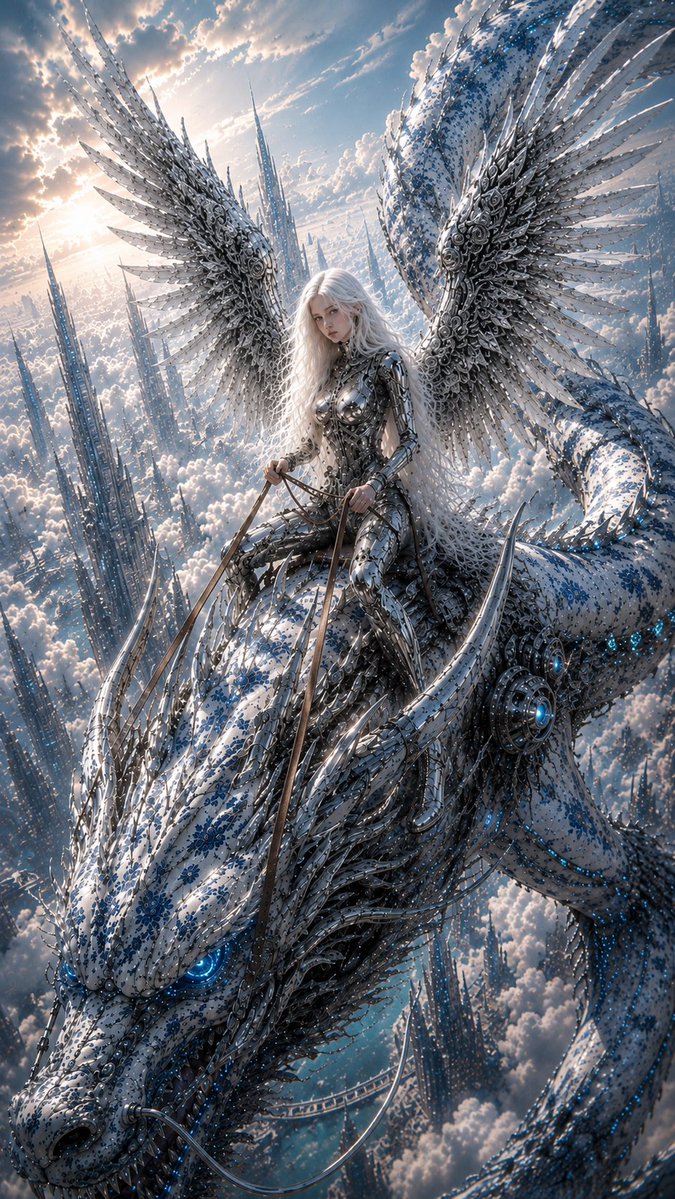
They speak in camera and lighting terms, not adjectives. "Cinematic," "editorial," and "golden hour" show up again and again because they compress a whole visual grammar (lens choice, contrast, color grading) into a single word Midjourney already understands.They name real, specific materials. Porcelain, raw ingredients, brick, weathered leather. Concrete nouns anchor even fantastical concepts (a cyber dragon, a spirit in the rain) so the model has something tangible to render instead of guessing.They pair one hero subject with one dramatic environment. An astronaut against a neon ring, a cowboy against a towering cumulus cloud, a figure in river water at golden hour. One subject, one setting, one lighting condition beats a prompt that tries to describe five things at once.They use structure for anything with multiple parts. A 4-frame editorial portrait grid or a hybrid diorama prompt works because the structure (grid, panel, layered scene) is stated explicitly, not left for the model to infer.They know when to strip everything back. The best icon-set prompt on the list has none of the cinematic language above. Flat, functional briefs, generator, minimalist, produce flat, functional results.The best Midjourney prompts
Product Photography from Raw Ingredients: turns raw, unstyled ingredients into a studio-quality product shot, useful as a template for any food or commerce brief.Cosmic Astronaut and Neon Ring: a single figure against a saturated neon backdrop, a clean example of the one-subject, one-environment rule at work.Cinematic 4-Frame Editorial Portrait Grid: four consistent portrait variations in one generation, the structured-grid approach done right.Hybrid Brick Diorama Prompt Structure: a layered miniature-world scene built from named materials, worth studying for its prompt architecture alone.Mysterious Nomadic Traveler Character Design: character design that leans on costume detail and silhouette instead of a busy background.White Snake Spirit Defeated in Rain: mythological subject matter grounded by a very specific weather and lighting condition.Photorealistic Indian Woman in Ocean Waves at Sunset: golden-hour water and skin tones rendered with genuine photographic realism.Cinematic Night Street Photography Prompt: street photography lighting cues (wet asphalt, neon spill, shallow depth of field) that read as a real night shoot.Cinematic Nightlife Fashion Editorial Midjourney Prompt: fashion-editorial framing applied to a nightlife scene, a good reference for mood-driven fashion work.Minimalist Icon Set Generator: the outlier on this list, proof that a tightly scoped, non-cinematic brief can be just as valuable as a moody portrait.Editorial motion-blur street photography with a still subject: a technical trick, motion blur around a sharp subject, stated as an explicit instruction rather than left to chance.Porcelain cyber dragon rider soaring above a cloud-city: a fantasy concept made believable by naming the exact material, porcelain, the surface is built from.A quick recipe
Name the subject and the material or texture it is made of or dressed in. Skin, porcelain, brick, denim, chrome. Concrete nouns beat vague ones every time.Set the light before anything else. Golden hour, neon spill, overcast, studio softbox. Lighting does more work than any additional adjective.Choose one environment and commit to it. Resist the urge to stack multiple settings; one clear backdrop reads better than three competing ones.If the output needs multiple parts, structure it explicitly. Say "4-frame grid" or "layered diorama" instead of hoping the model infers the layout.Browse more Midjourney prompts or head back to the blog for more roundups like this one.