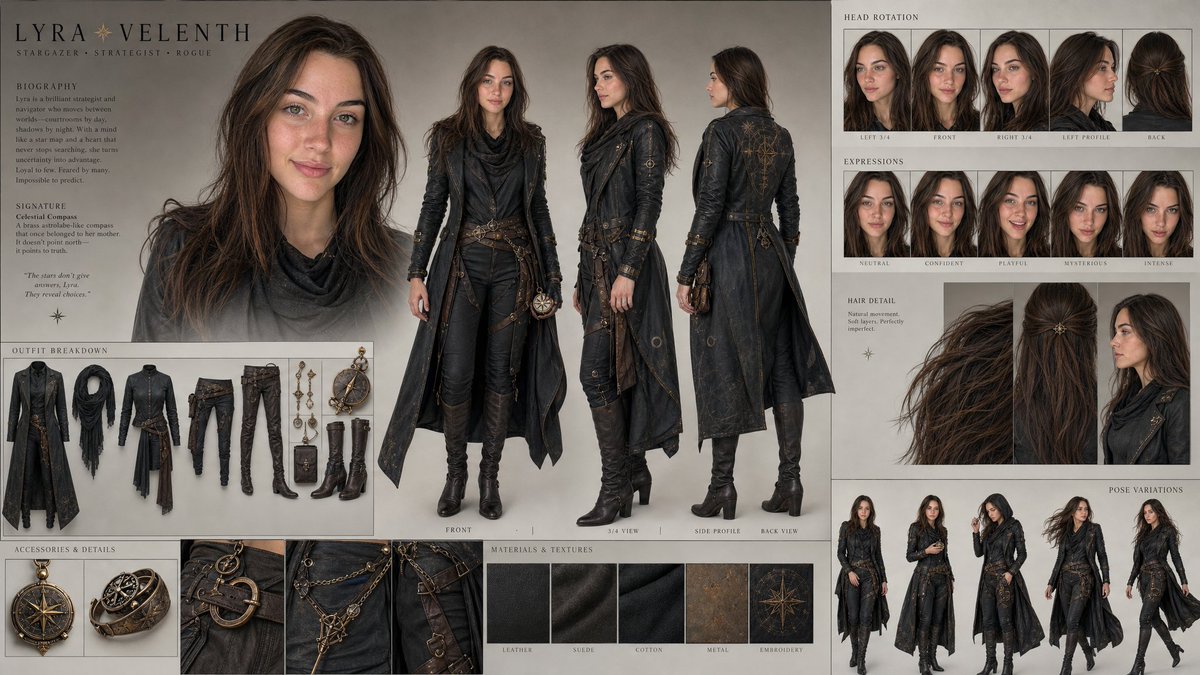
We mined the 11,098 portrait prompts on Wikiprompt for the patterns behind striking AI portraits: lens language, named light, texture anchors, and nine real prompts worth stealing.
Portraits are the largest single subject on Wikiprompt: 11,098 active image prompts carry the portrait keyword, more than product shots, landscapes or posters. This guide mines that corpus for the patterns that separate a striking AI portrait from a generic one, with real prompts you can open and reuse.
What the data says
A few numbers from the 11k portrait prompts in the encyclopedia:
Photorealism dominates. 3,547 prompts ask for photorealistic output, and 3,207 lean on the word cinematic. The stylized minority (art deco, collage, illustration) is smaller but scores disproportionately well on originality.Lens language is the most copied trick. Shallow depth of field (1,618 prompts), bokeh (1,250) and close-up (1,203) appear constantly. Writing like a photographer, not a painter, is the norm in high-rated portraits.Light gets named, not described. Golden hour (927), cinematic lighting (801) and film grain (788) are the standard vocabulary. Prompts that name a lighting setup beat prompts that say "beautiful lighting".The model mix is broad. GPT Image 2 leads (1,872 prompts), followed by Nano Banana (1,401), Midjourney (1,289) and Nano Banana Pro (967) - portraiture is the one genre every image model gets exercised on.Patterns that work
Reading the top-rated portrait prompts side by side, the same moves keep showing up:
One subject, one sentence, up front. The best prompts open by fixing who is in the frame (age, wardrobe, expression) before any style words.Camera vocabulary over adjectives. "85mm, f/1.8, shallow depth of field" does more work than "stunning, highly detailed".A named light source. Golden hour, single softbox, neon spill, window light - top prompts pick one and commit.A texture anchor. Film grain, newspaper collage, art deco poster, water droplets: one tactile idea gives the image a personality that pure realism lacks.Template placeholders. The most reused prompts swap the subject with [PERSON] or keep wardrobe/backdrop as editable slots.Nine portrait prompts worth stealing
Tamara de Lempicka Art Deco Character Portrait - a full art-movement transfer: geometric shading and 1920s glamour instead of yet another studio headshot.Newspaper Collage Editorial Portrait - builds the face out of torn newsprint; the strongest texture-anchor example in the corpus.Cinematic Cyberpunk Noir Rain Portrait - neon spill, wet skin, hard rim light; the reference for "name your light source".Underwater Portrait with Oxygen Mask - an unusual environment doing the creative work while the camera language stays classic.Cyberpunk Mathematical Portrait - overlays equations as projection mapping; concept-first portraiture.Photorealistic Himalayan Travel Selfie - the casual-realism recipe: imperfect framing and phone-camera cues that read as authentic.Global Traditional Fashion Contact Sheet - a grid of wardrobe variations in one generation; the template pattern at its best.Luxury Editorial Jewelry & Perfume Boutique Portrait - commercial editorial lighting with product placement, straight out of a magazine brief.Premium Cinematic Character Design Sheet - one character, multiple angles and expressions; the working tool behind consistent AI characters.A starter recipe
Combine the five patterns into one reusable skeleton:
Close-up portrait of [SUBJECT: age, wardrobe, expression], 85mm lens, f/1.8, shallow depth of field, [LIGHT: golden hour side light / single softbox / neon spill], [TEXTURE: film grain / collage / water droplets], photorealistic, editorial mood
Swap the three slots and you cover most of what the top prompts do.
Explore more
Browse the full portrait corpus with the search facets: portrait prompts, filter by GPT Image 2, Nano Banana or Midjourney, or start from the top rated list.