Stable Diffusion Prompt Syntax Explained: What 787 Civitai Prompts Actually Use
Weights, LoRA tags, BREAK, score tags and negative prompts: we measured how often each Stable Diffusion syntax pattern appears in 787 curated Civitai prompts, and what each one does.
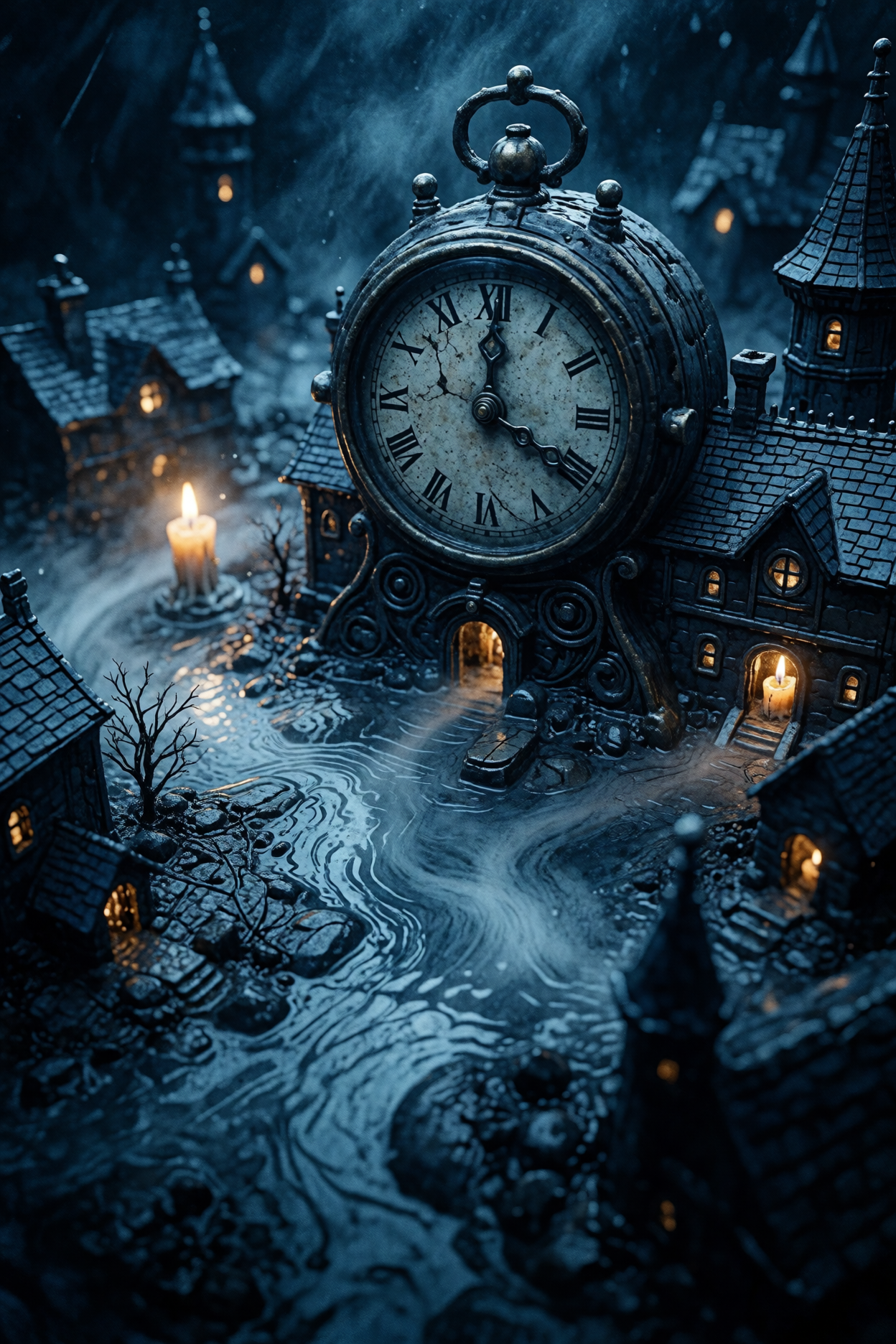
Stable Diffusion prompts look nothing like the conversational prompts people write for ChatGPT or GPT Image. They are full of parentheses, numbers, angle brackets and words like "masterpiece" that seem to do nothing. We looked at the 787 indexed Civitai prompts in the Wikiprompt catalog to see which of these habits are actually common, and what each one does.
What we measured
Every prompt in this sample was published with its generated image on Civitai and then curated into Wikiprompt. The median prompt is 68 words long, much longer than a typical one-line request. Here is how often each syntax pattern shows up:
The most common base models in the sample are Illustrious, SDXL 1.0, Krea and SD 1.5, plus many LoRA-tuned variants. The dominant styles are anime, cinematic, digital art, photorealistic and illustration.
The patterns, one by one
Negative prompts
Half of the prompts carry a negative prompt: a second list of things the model should avoid, such as "blurry, extra fingers, watermark, lowres". Diffusion models steer away from whatever is in the negative prompt, so it works as a cleanup pass on common defects. If you copy a Stable Diffusion prompt, copy its negative prompt too: the result often depends on it as much as on the positive one.
Quality tags: "masterpiece", "best quality", "absurdres"
Around a third of prompts open with a stack of quality words. These tags come from how anime-focused models were trained: images in the training data were labeled with quality ratings, so asking for "masterpiece, best quality" pulls the output toward the top-rated part of that data. They matter most on anime models like Illustrious and much less on photorealistic or newer models.
Score tags: `score_9, score_8_up`
Score tags are the same idea, made explicit. Pony-based and some Illustrious-based models were trained with numeric aesthetic scores, and score_9, score_8_up, score_7_up asks for images that scored at least that high. They do nothing on models that were not trained with them, which is why they appear in only 16% of the sample. A good example is Cinematic Medieval Cottage in Autumnal Marsh, which combines score tags with a detailed scene description.
LoRA tags: `<lora:name:0.8>`
A third of prompts load a LoRA, a small add-on model that teaches the base model a style, character or concept. The number after the name is the strength: around 0.6 to 1.0 is typical, and higher values can overpower the rest of the prompt. Because the LoRA file has to exist in your setup, these prompts are the least portable: without the same LoRA, you get a different image. Miniature Fantasy Diorama with Ink Wash Style shows a LoRA used for a specific art style on top of a clear subject description.
Weighted terms: `(term:1.2)`
14% of prompts adjust the emphasis of individual words. (glowing eyes:1.3) makes that detail stronger, (background:0.8) weakens it, and plain parentheses add a small boost. Weights between 0.8 and 1.4 are the useful range; extreme values tend to break the image. See Girl Sitting Under Starry Night Forest with Fireflies for weights used to balance subject and scenery.
`BREAK`
BREAK splits a long prompt into separate chunks, so that colors and attributes from one part do not leak into another (the classic problem of a "red dress" turning the whole scene red). It is the rarest pattern in the sample at 6%, and mostly appears in long character prompts like White Alpha Werewolf Grandpa.
Natural sentences
A third of prompts are written partly in full sentences instead of comma-separated tags. Newer models with stronger text encoders (Flux, Krea and recent SDXL fine-tunes) understand descriptive language well, so the trend is moving toward plain descriptions with a few tags for style. The tag-heavy style is still the norm for anime models.
A quick starter recipe
If you are writing a Stable Diffusion prompt from scratch, this structure covers what the best prompts in the sample have in common:
masterpiece, best quality, score_9a lighthouse keeper's cat on a stormy cliffcowboy shot, looking at viewer, wind-blown fur, dramatic skycinematic lighting, digital art, moody<lora:your_style:0.8>lowres, blurry, bad anatomy, extra fingers, watermark, textStart without weights. Add (term:1.2) only when one specific detail keeps getting lost.
Explore more
Related Articles
- The Best Anima Prompts: What 1,000 Civitai Recipes Teach
Nov 9, 2026 · 6 min read
- 最佳Anima提示词:1,000个Civitai配方教会我们什么
Nov 9, 2026 · 6 min read
- Les Meilleurs Prompts Anima : Ce que 1 000 Recettes Civitai Enseignent
Nov 9, 2026 · 6 min read
- Las Mejores Indicaciones de Anima: Lo que Enseñan 1,000 Recetas de Civitai
Nov 9, 2026 · 6 min read
- As Melhores Prompts do Anima: O que 1.000 Receitas do Civitai Ensinam
Nov 9, 2026 · 6 min read